514
PERSONAL COMPUTERS (PCs) fall into two types : IBM-compatible PCs , known simply as PCs, and apple macintosh PCs, known as “Macs”. They differ in the way files and programs, and the user’s access to them, are organized , and programs must be tailored for each type. However, in most other respects PCs and Macs have much in common. Both contain microchips , or integrated circuit , that store and process data . The “brain” of any PC is a chip known as the central processing unit (CPU) , which performs mathematical operations in order to run program instructions and receive , store , and output data . The most powerful personal computers CPUs today can perform more than a billion calculations a seconds . data can be input via CDs ,USB memory sticks , and other storage media. Highly portable laptop networks PCs are also in widespread use. Most PCs are able to communicate with many other devices, including digital cameras and smartphones.
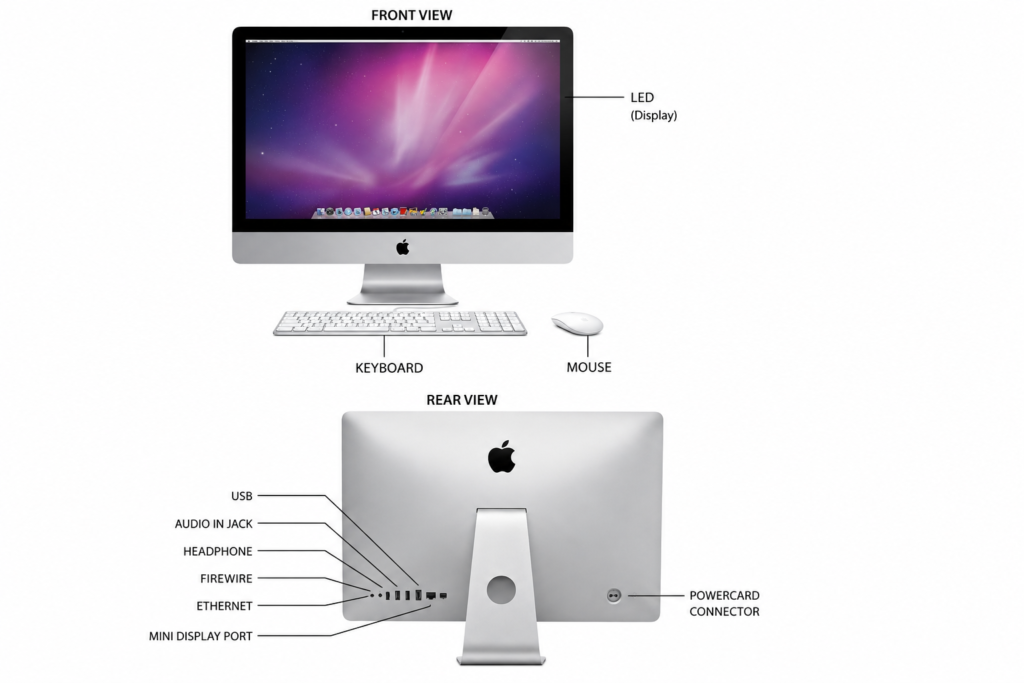
The Apple iMac is a stylish all-in-one desktop computer made by Apple. Unlike traditional desktop computers that require a separate CPU tower, the iMac combines the computer hardware and display into a single slim device, giving users a clean and modern workspace. It is well known for its high-resolution Retina display, powerful performance, and elegant design. Modern iMac models use Apple’s M-series chips, which provide fast speed, smooth multitasking, quiet operation, and energy efficiency. The iMac runs on macOS, allowing seamless integration with other Apple devices such as the iPhone and iPad. It is commonly used for tasks like studying, office work, graphic design, photo editing, video production, and entertainment. The built-in camera, speakers, microphones, and included accessories like the Magic Keyboard and Magic Mouse make it a complete desktop solution for both personal and professional use.
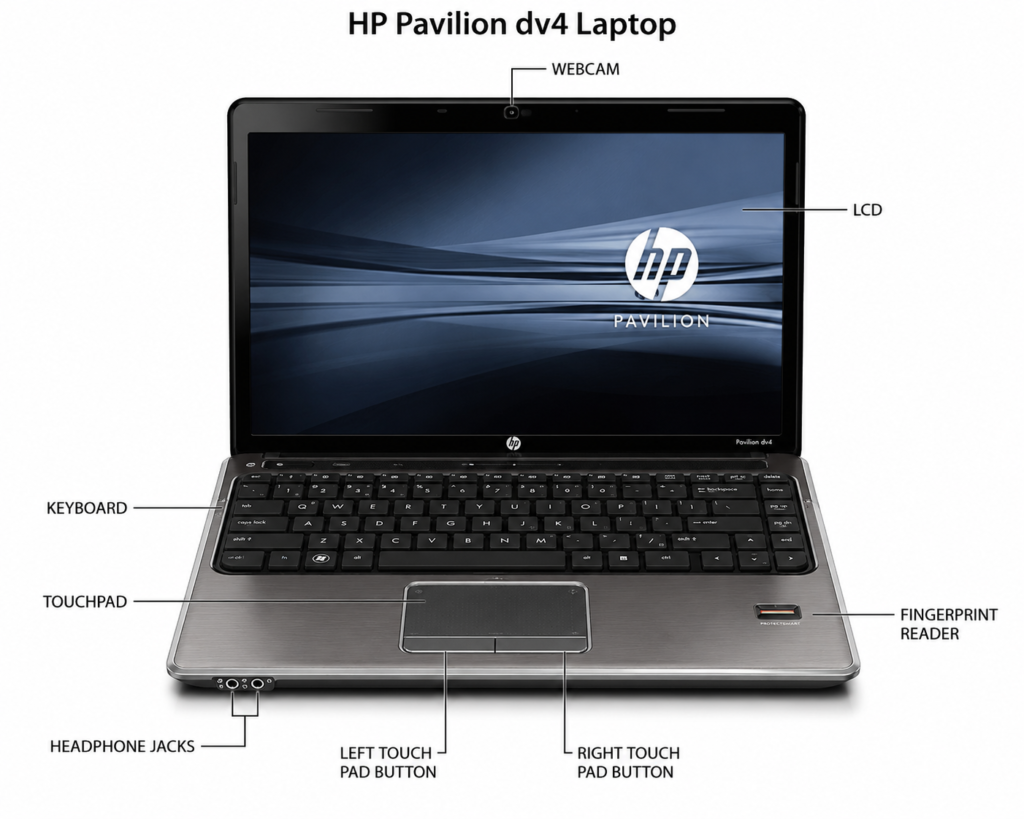
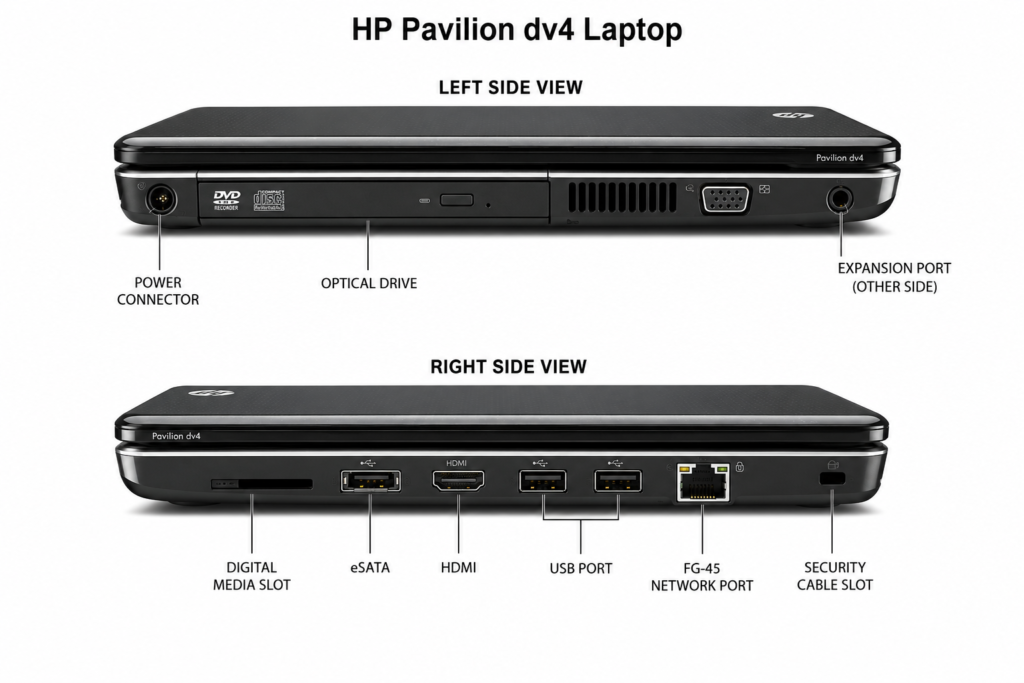
The HP Pavilion dv4 is a stylish multimedia laptop series developed by HP and introduced around 2008. It features a 14.1-inch display and was designed for students, home users, and entertainment purposes. The laptop became popular because of its attractive design, good sound quality, and balanced performance for everyday tasks such as internet browsing, office work, watching movies, and light gaming. Different models of the dv4 series were available with Intel Core 2 Duo, Intel Core i3, and AMD processors along with graphics options from Intel, ATI Radeon, and NVIDIA. Most versions included features such as a built-in webcam, Wi-Fi, DVD writer, Bluetooth, and stereo speakers. Some advanced models also offered fingerprint readers and Beats Audio support. The laptop usually came with Windows Vista or Windows 7 operating systems and supported up to 4GB or more RAM depending on the model. Although it is now considered an older laptop series, many users still appreciate the HP Pavilion dv4 for its durability, comfortable keyboard, and multimedia features.
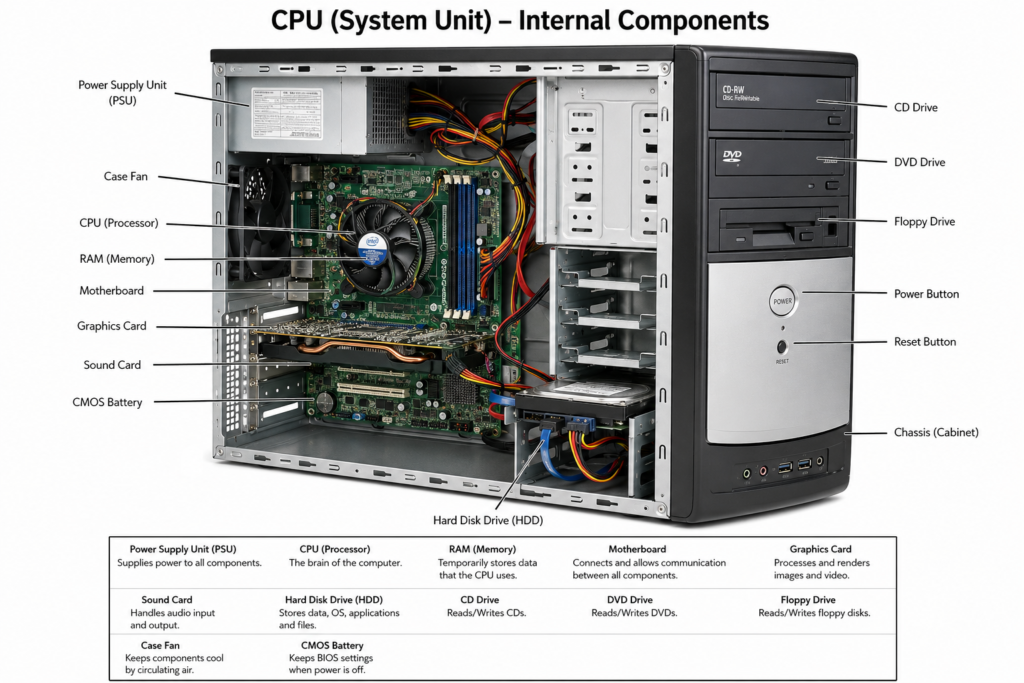
The CPU, or Central Processing Unit, is known as the “brain” of a computer because it controls and processes all the instructions needed for the computer to work. It performs calculations, manages data, and controls the operations of all hardware and software components. Every task performed on a computer, such as opening programs, browsing the internet, playing games, or editing documents, is handled by the CPU. It is installed on the motherboard inside the system unit and works closely with other components like RAM, storage devices, and graphics cards. Modern CPUs are made by companies such as Intel and AMD, and they contain multiple cores that allow the computer to perform many tasks at the same time efficiently. The speed and performance of a computer largely depend on the power of its CPU.
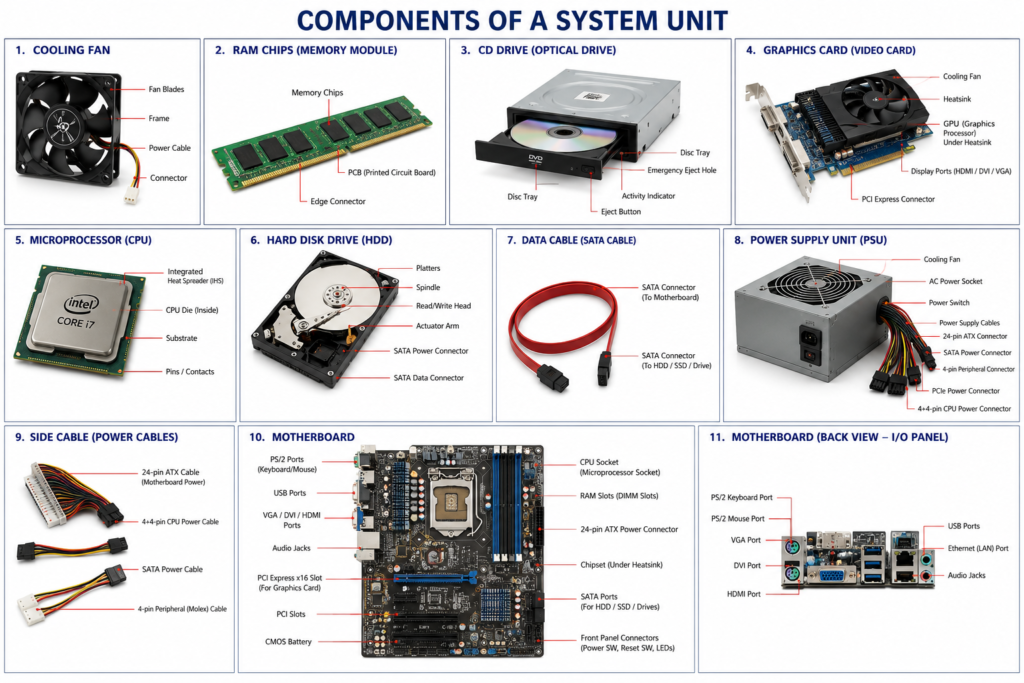
The system unit is the main part of a computer that contains all the internal electronic components required for processing and storing data. It is commonly called the CPU cabinet or computer case. Inside the system unit, several important components work together to operate the computer. The motherboard is the main circuit board that connects all the components and allows them to communicate with each other. The microprocessor or CPU acts as the brain of the computer and performs calculations and processing tasks. RAM (Random Access Memory) temporarily stores data and programs that are currently in use for faster access. The hard disk drive or solid-state drive stores files, software, and the operating system permanently. The power supply unit converts electrical power from the wall outlet into usable power for the computer components. Cooling fans help maintain proper temperature and prevent overheating. The optical drive, such as a CD or DVD drive, is used to read and write discs. A graphics card processes images and videos for display on the monitor. Data cables and power cables connect the different components inside the system unit. Expansion cards, network cards, and sound cards may also be included to add extra features and functionality to the computer.